Maria Cruz-Andino immigrated to Michigan with a teaching degree, education experience, and a passion for teaching, but because of difficulties related to her English-language skills, she had to quit her job. Instead, she worked seven days a week in manufacturing.
This case is one of many stories about bilingual professionals who cannot fully use their advantages due to English-language barriers in higher education and the professional world.
However, through Davenport University´s Casa Latina, Cruz-Andino got an opportunity to return to the classroom. She participated in the Graduate Certificate in Urban Education–Bilingual program, where she could develop professional English skills to function in Michigan's educational system while being surrounded by an atmosphere where Spanish is considered an advantage. Currently, she is a foreign language teacher at Southwest Middle High School–Academia Bilingüe in Grand Rapids, where she motivates middle and high school students.
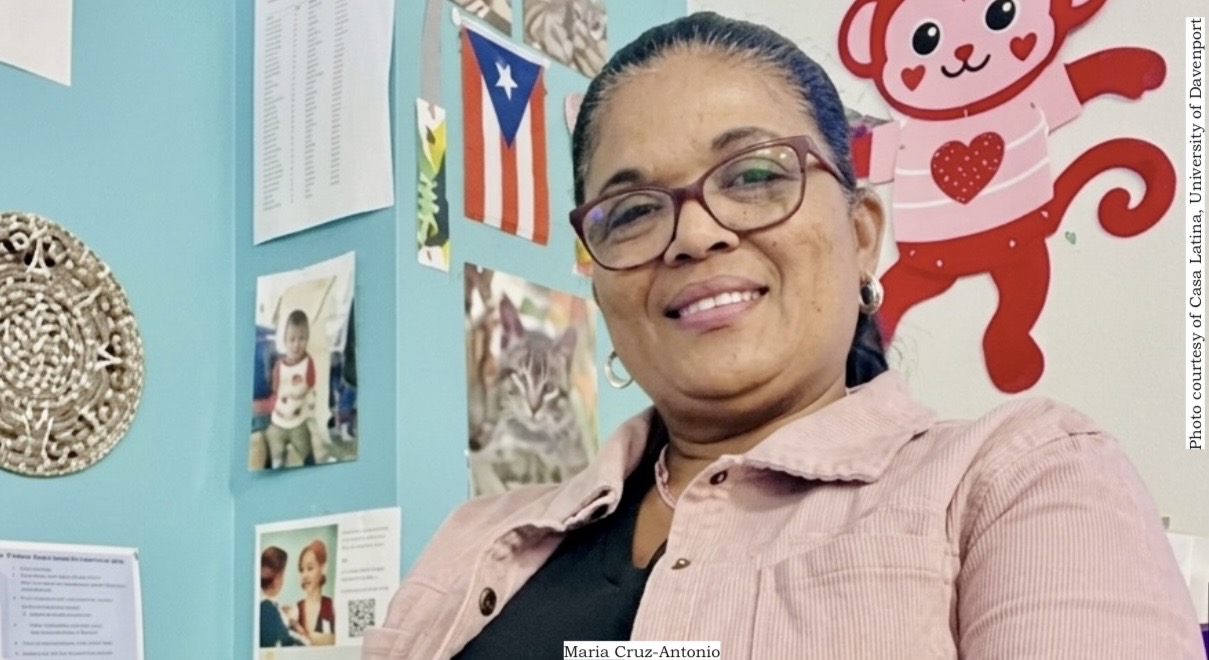
Cruz-Andino's story illustrates the mission of the Casa Latina program: to help bilingual students take advantage of their existing linguistic and professional strengths on their educational path, rather than neglecting them.
Filling the Gaps in Higher Education
Higher education has long struggled to ensure equitable and successful pathways for the increasing number of Hispanics and Latinos in the country. Students may have extensive education and experience, but it does not mean that these assets will be taken into consideration by educational institutions. Immigrants, working professionals, first-generation college students, and others often do not have opportunities to apply their knowledge and experience and must instead start their studies from scratch.
At the same time, companies in education, healthcare, technology, and business need bilingual professionals who can communicate more effectively with families, patients, and customers. Bilingualism is not an attribute anymore. Now it is a workforce competency that helps organizations connect better with the communities they inevitably serve.
Davenport University created Casa Latina to help bilingual students use their language skills to benefit themselves and their workplace . Since its launch in fall 2024, the program has focused on students whose everyday lives, and even their work, are bilingual. It does not view the proficiency in Spanish as just an extra skill but integrates bilingualism in the educational process.
The mission of the program is simple: expand access to higher education for bilingual students and prepare bilingual professionals for fields where their knowledge, experience, and cultural competence are essential.
The Bilingual Model for Working Professionals
Casa Latina provides online pathways for associate, bachelor's, and master's degrees in business, technology, health, and urban education. The online format is particularly important for working professionals, career changers, parents, and all other individuals who have to balance their educational paths with many responsibilities.
The courses in the program are led by bilingual instructors who understand the cognitive experience of using both English and Spanish. Students are introduced to the course concepts in both languages while developing specific terminology and communication skills necessary for professional practice.
The model does not try to replace one language with another. Instead, it helps students use both languages to benefit professional practice, develop English proficiency where necessary, and improve Spanish skills.
Casa Latina also addresses the challenge that international students face in the US when it comes to the evaluation of international academic credentials. Davenport evaluates the international credentials of eligible candidates to avoid unnecessary repetition of coursework and help them complete their education more quickly. And we do not charge anything for it!
Certification pathways are also a significant part of the program's design. For example, the Graduate Certificate in Urban Education provides an alternative pathway into teaching. Students can teach in classrooms while working on obtaining their certificates. Marketing students, as part of their coursework, complete industry certifications, such as HubSpot.
Since opening its doors to its first group, Casa Latina has served approximately 50 students and retained more than 90% of them. Such a high retention rate proves that students are more likely to stay enrolled when they are included and their identities, experiences, and responsibilities are recognized.
Building on Experience
The story of Marina Masterman is another good example of how this approach works. She is a native of Costa Rica with a background in nutrition. However, she was currently working as a third-grade Spanish immersion teacher. She needed a pathway to obtain her Michigan teaching certificate without leaving her job or interrupting her life as a mother. Through the flexible structure of the Casa Latina program, she completed the necessary coursework while teaching, and now she has a certificate and is ready to get her master's degree.
For Cruz-Andino and Masterman, access to higher education does not only include admission to a university. It includes an educational approach that considers the experience and knowledge of adult learners.
Moreover, the success of these students positively impacts their community and the people around them. Bilingual teachers help families and students to communicate better with the school. They become role models for young people who rarely meet someone from their cultural background in leadership positions, while helping schools to better serve the increasingly diverse community.
The same goes for bilingual professionals in other fields. Bilingual healthcare, business, and technology professionals help organizations to gain trust, improve communication, and serve their communities better.
Future Plans
Currently, Davenport's plan for the expansion of Casa Latina goes beyond achievements in education and business. The university is exploring the possibility of creating future programs aligned with healthcare workforce needs. In addition, it is discussing possible collaboration with other community colleges and four-year universities to help students transfer credits and access programs not available in their communities.
The bigger picture here is not just the creation of one program. It is the demonstration of the possibilities for redesigning the whole educational process around the students´ strengths.
For many years, bilingual students have often been expected to adapt to an institution that was not created specifically for them. The program of Casa Latina starts from a different point of view: language, culture, experience, and prior learning are not obstacles to be overcome. They are the foundation for academic and professional success.
By turning bilingualism from an obstacle into an explicit professional advantage, Casa Latina helps students to reclaim their careers and enter the high-need professions. In this way, it sends a broader message to higher education institutions: recognizing the students´ full potential means creating better access and opportunities.
About the author
Carlos Sanchez is the Executive Director of Bilingual Programming at Davenport University, where he leads the development of bilingual, online undergraduate and graduate pathways designed to expand access, improve completion, and reduce structural barriers for Latino and adult learners. Before joining Davenport, he spent ten years at Ferris State University, where he developed LEADeres, a recognized professional development and leadership program. A graduate of the International Business program at Davenport University, he holds a Certification in Design and Innovation Management and a Master of Arts in Design from Kendall College. His work centers on program design, and equity-focused innovation in higher education.